
Brightness Calibration for TFT LCD Displays
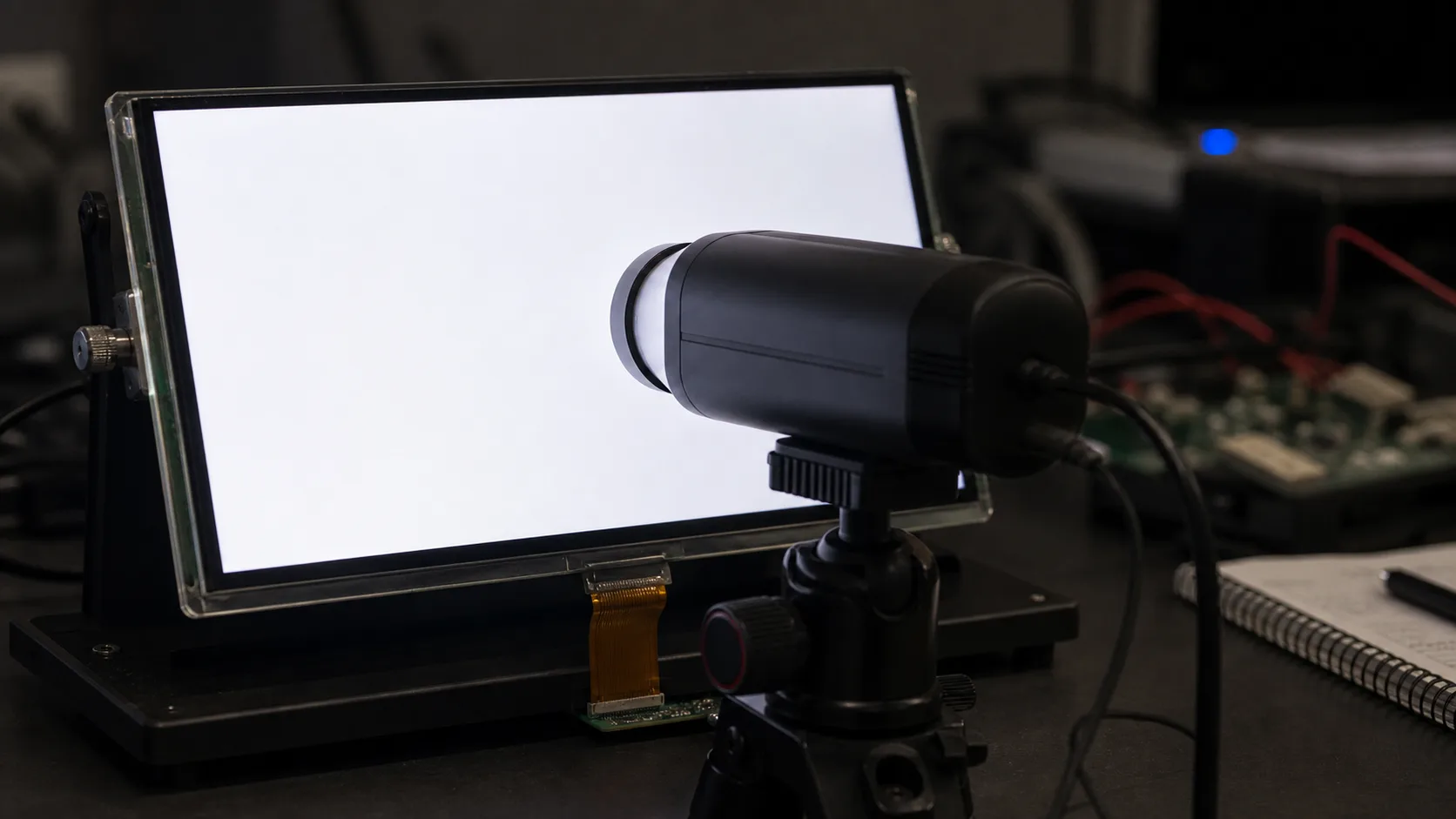
Brightness Calibration for TFT LCD Displays: Why It Matters in Industrial and Embedded Systems
When engineers discuss TFT LCD displays, the conversation usually focuses on resolution, interface type, viewing angle, or touch technology. Brightness is also mentioned frequently, especially in industrial products designed for outdoor or high-ambient-light environments.
However, one topic that receives much less attention is brightness calibration.
In actual embedded and industrial projects, brightness calibration can significantly affect product quality, visual consistency, user experience, and even long-term reliability. Two displays using the same LCD panel may still appear noticeably different if the backlight system or brightness calibration process is not properly controlled.
This becomes especially important in industrial equipment, medical devices, automotive systems, and professional control panels where consistent visual appearance is expected across multiple units.
Brightness calibration is not only about making a display brighter. In many cases, the real goal is to achieve predictable and repeatable luminance behavior across different production batches and operating environments.
This article explains how brightness calibration works in TFT LCD displays, why it matters in industrial applications, and what engineers should consider during product development and manufacturing.
What Is Brightness Calibration?
Brightness calibration refers to the process of adjusting and standardizing the luminance output of a display so that the screen operates within a defined brightness target.
In simple terms, it means making sure the display produces the expected brightness level under controlled conditions.
This process may involve:
- Backlight current adjustment
- PWM duty cycle tuning
- Gamma correction
- White point adjustment
- Optical measurement
- Software compensation
In industrial products, brightness calibration is usually performed during manufacturing or final system testing.
The target is not always maximum brightness.
In many applications, consistency is more important than absolute luminance.
Why Brightness Consistency Matters
Many engineers underestimate how visible brightness variation can be between display modules.
Even when using the same LCD panel model, differences can appear because of:
- LED backlight variation
- Optical film differences
- LCD transmission tolerances
- Driver IC behavior
- Temperature effects
- Aging characteristics
Without calibration, two displays installed side-by-side may look noticeably different.
Typical problems include:
- One display appears warmer or cooler
- Brightness mismatch between devices
- Uneven grayscale appearance
- Different visual response at low brightness
- Poor readability under sunlight
In industrial systems, these differences can negatively affect perceived product quality.
Typical Brightness Units
Brightness is usually measured in:
| Unit | Description |
|---|---|
| Nit (cd/m²) | Candela per square meter |
| Lux | Ambient light measurement |
| PWM Duty Cycle | Relative backlight control level |
Most TFT LCD specifications define brightness using nits.
Typical ranges include:
| Application | Typical Brightness |
|---|---|
| Indoor consumer devices | 250–400 nits |
| Industrial HMI | 500–800 nits |
| Outdoor equipment | 1000+ nits |
| Sunlight-readable displays | 1500+ nits |
Brightness calibration helps ensure the actual measured value matches the design target.
Backlight Is Usually the Main Variable
In TFT LCD displays, the LCD panel itself does not generate light.
The brightness mainly comes from the LED backlight system.
As a result, calibration usually focuses on the backlight rather than the LCD glass.
The backlight system typically includes:
- White LEDs
- Light guide plate
- Diffuser films
- Reflective films
- LED driver circuit
Small variations in LED efficiency can produce noticeable brightness differences.
For example:
| LED Batch | Measured Brightness |
|---|---|
| Batch A | 720 nits |
| Batch B | 810 nits |
| Batch C | 760 nits |
Without calibration, final product appearance may vary significantly.
Common Brightness Calibration Methods
Different products use different calibration approaches depending on cost and accuracy requirements.
1. Fixed Backlight Current Calibration
This is one of the simplest methods.
The LED driver current is adjusted during production until the display reaches the target brightness level.
Advantages:
- Low cost
- Simple implementation
- Common in industrial products
Limitations:
- Does not compensate for long-term aging
- Limited dynamic adjustment capability
2. PWM Brightness Calibration
Many embedded systems use PWM (Pulse Width Modulation) to control LED brightness.
The processor adjusts the PWM duty cycle to regulate luminance.
Typical relationship:
| PWM Duty | Relative Brightness |
|---|---|
| 20% | Low brightness |
| 50% | Medium brightness |
| 100% | Maximum brightness |
However, brightness response is not perfectly linear.
Calibration tables are often used to improve visual consistency.
3. Gamma Calibration
Human vision does not respond linearly to brightness changes.
As a result, displays often require gamma correction to produce visually smooth grayscale transitions.
Gamma calibration affects:
- Image contrast
- Dark detail visibility
- Perceived brightness
- Color consistency
In professional systems, gamma adjustment may be performed using lookup tables inside the display controller.
4. Ambient Light Compensation
Some advanced systems dynamically adjust brightness based on ambient lighting conditions.
This is commonly used in:
- Automotive displays
- Outdoor terminals
- Medical equipment
- Smart home panels
A light sensor measures environmental brightness and adjusts the backlight automatically.
This improves readability while reducing power consumption.
Challenges in Brightness Calibration
Brightness calibration sounds simple, but real-world implementation can become surprisingly complicated.
Temperature Effects
LED brightness changes with temperature.
Typical behavior:
| Temperature | Relative Brightness |
|---|---|
| 0°C | Higher brightness |
| 25°C | Normal |
| 70°C | Reduced brightness |
Industrial products operating across wide temperature ranges may require temperature compensation.
This is especially important in outdoor equipment.
LED Aging
LED brightness gradually decreases over time.
This phenomenon is called lumen depreciation.
Over thousands of operating hours:
- Brightness decreases
- White balance shifts
- Uniformity changes
High-brightness industrial displays are particularly affected because they operate at higher LED current levels.
Some long-life systems intentionally reduce maximum brightness to improve LED lifetime.
Optical Film Variations
Brightness is also influenced by optical materials inside the display module.
These include:
- Diffuser films
- Prism films
- Polarizers
- Light guide plates
Small manufacturing differences can affect final luminance output.
This is one reason calibration is often performed at the final assembly stage.
Human Visual Sensitivity
Human eyes are very sensitive to brightness differences, especially when displays are placed side-by-side.
In industrial control systems using multiple displays, even a 10% brightness difference may become noticeable.
This is why many manufacturers specify brightness tolerance ranges.
Typical examples:
| Product Type | Brightness Tolerance |
|---|---|
| Consumer electronics | ±15% |
| Industrial displays | ±10% |
| Medical displays | ±5% |
Brightness Calibration in Industrial Applications
Industrial systems often have stricter brightness requirements than consumer products.
Several factors contribute to this.
1. Long Product Life Cycles
Industrial products may remain in service for many years.
Brightness consistency across production batches becomes important because replacement modules may be installed years later.
Poor calibration control can result in visible mismatch between old and new displays.
2. Wide Operating Temperatures
Industrial equipment may operate in:
- Factories
- Outdoor environments
- Vehicles
- Cold storage systems
Brightness calibration must remain stable across varying temperatures.
3. High Ambient Light Conditions
Outdoor systems often require high brightness for readability.
Examples include:
- EV charging stations
- Industrial HMI panels
- Agricultural equipment
- Marine displays
In these products, brightness calibration directly affects usability.
4. Multi-Display Systems
Industrial control rooms sometimes use multiple TFT LCD panels together.
If brightness calibration is inconsistent, the difference becomes very obvious.
Uniformity is therefore important for professional appearance.
Typical Brightness Calibration Workflow
A simplified manufacturing process may look like this:
| Step | Description |
|---|---|
| LED installation | Assemble backlight system |
| Initial power-on | Verify display operation |
| Optical measurement | Measure luminance output |
| Current/PWM adjustment | Tune brightness level |
| Uniformity inspection | Check brightness consistency |
| Final verification | Confirm specification compliance |
In higher-end products, automated optical inspection systems may perform this process.
Brightness Calibration and Power Consumption
Higher brightness usually means higher power consumption.
This is especially important in:
- Battery-powered devices
- Portable instruments
- Handheld terminals
For example:
| Brightness | Relative Power Consumption |
|---|---|
| 300 nits | Low |
| 700 nits | Medium |
| 1500 nits | High |
Engineers must balance readability and power efficiency.
In many industrial products, excessive brightness is unnecessary indoors and only increases heat generation.
Software Control and User Experience
Brightness calibration also affects software behavior.
Poorly calibrated brightness curves may produce:
- Sudden brightness jumps
- Flicker at low brightness
- Uneven dimming response
Many embedded systems therefore implement brightness mapping tables to improve user experience.
A properly calibrated brightness curve feels smoother and more natural.
Why Brightness Calibration Is Becoming More Important
As TFT LCD displays become larger, brighter, and more widely used in industrial environments, brightness calibration is becoming increasingly important.
Several trends are driving this:
- Higher brightness requirements
- Multi-display systems
- Outdoor applications
- Better visual expectations
- Longer product life cycles
In many projects, calibration quality directly affects the perceived professionalism of the final product.
Conclusion
Brightness calibration is often overlooked during early embedded system development, but it plays an important role in real industrial TFT LCD applications.
The goal is not simply achieving maximum brightness. More importantly, calibration ensures consistent luminance behavior, stable visual quality, and predictable long-term performance.
Factors such as LED variation, temperature, optical materials, and aging all influence display brightness. Without proper calibration, even displays using the same LCD panel may appear noticeably different.
For industrial embedded products, where reliability and long-term consistency are critical, brightness calibration remains an important part of display engineering and manufacturing quality control.